
Which Skills Employers Want Most in 2026 (Beyond a Degree)
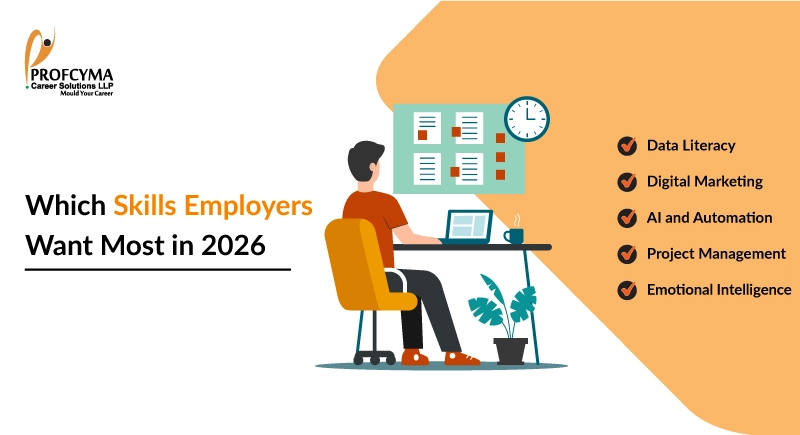
The credential economy is rapidly giving way to the skills economy. While degrees still matter for credibility and basic qualification, employers across industries are increasingly prioritizing demonstrable competencies over academic credentials when making hiring and promotion decisions.
According to LinkedIn's 2025 Global Talent Trends Report, 73% of hiring managers now evaluate candidates primarily on skills and demonstrated capabilities rather than educational pedigree, marking a fundamental shift in recruitment philosophy.
This transformation isn't about degrees becoming irrelevant — it's about degrees becoming insufficient on their own. The question for students, fresh graduates, and working professionals in 2026 is clear: What skills do employers actually want, and how do you develop them alongside or beyond your degree?
Understanding the Skills-First Hiring Revolution
Skills-first hiring (also called competency-based hiring) is a recruitment approach where employers evaluate candidates primarily on demonstrable job-relevant skills, technical proficiencies, problem-solving capabilities, and portfolio evidence rather than relying predominantly on educational credentials, prior job titles, or years of experience.
This shift has accelerated dramatically post-2020. The World Economic Forum's Future of Jobs Report 2025 projects that 44% of workers' core skills will be disrupted by 2027, requiring massive upskilling and reskilling across the global workforce.
What's driving this change?
- Technology disruption: AI, automation, and emerging tools rendering traditional skills obsolete faster
- Skills gap crisis: Educational institutions struggling to keep curricula aligned with industry needs
- Remote work normalization: Geographic boundaries eliminated, creating global competition for talent
- Gig economy growth: Project-based work requiring specific, proven capabilities over generic credentials
The Top 10 Skills Employers Want Most in 2026
1. Data Literacy and Analytics
Data literacy is the ability to read, interpret, analyze, and communicate insights from data using tools like Excel, SQL, Python, Power BI, Tableau, or Google Analytics, enabling evidence-based decision-making across all business functions — not just technical roles.
According to Gartner's 2025 Data & Analytics Survey, data literacy is now required for 82% of job openings across marketing, finance, operations, HR, and sales functions, not just data science positions.
Why employers prioritize this:
- Every business function now relies on data-driven decision making
- Marketing needs campaign analytics; finance needs forecasting models; HR needs attrition analysis
- Gut-feel decisions are being replaced by A/B testing and performance metrics
How to develop it:
- Take courses: Google Data Analytics, Microsoft Power BI certification
- Practice with real datasets from Kaggle or government open data portals
- Build a portfolio: analyze public data and present insights visually
Entry-level roles requiring data literacy: Business Analyst, Marketing Analyst, Operations Analyst, Financial Analyst, HR Analytics Associate
2. Digital Marketing and Growth Skills
Digital marketing encompasses SEO (search engine optimization), SEM (search engine marketing), social media strategy, content marketing, email automation, conversion optimization, and performance analytics — skills that directly generate revenue and customer acquisition for businesses.
The Digital Marketing Institute's 2025 Skills Report indicates that 67% of companies struggle to find candidates with practical digital marketing skills, with the gap most acute in performance marketing and marketing automation.
Core competencies employers seek:
- Paid advertising: Google Ads, Meta Ads Manager, LinkedIn Campaign Manager
- SEO/SEM: Keyword research, on-page optimization, link building strategies
- Marketing automation: HubSpot, Mailchimp, ActiveCampaign workflows
- Analytics: Google Analytics 4, attribution modeling, ROI calculation
- Content strategy: Audience research, content calendaring, distribution optimization
Certification value: Google Ads certification, HubSpot Content Marketing, Meta Blueprint
Starting salaries for digital marketing skills: ₹3.5-7 lakhs per annum (entry-level), ₹10-20 lakhs (3-5 years experience)
3. AI and Automation Proficiency
AI proficiency for non-technical professionals refers to the ability to effectively use AI-powered tools (ChatGPT, Claude, Midjourney, Jasper, Copy.ai), understand prompt engineering principles, integrate AI into workflows for productivity gains, and identify appropriate use cases for AI automation within business processes.
Practical AI skills employers value:
- Prompt engineering: Crafting effective prompts to generate accurate, useful outputs
- AI-assisted content creation: Using tools for writing, design, video, presentations
- Workflow automation: Identifying repetitive tasks suitable for AI automation
- Critical evaluation: Assessing AI outputs for accuracy, bias, and appropriateness
- AI ethics awareness: Understanding responsible AI use and limitation recognition
This is not about becoming a machine learning engineer — it's about being an AI-enabled professional who amplifies productivity through intelligent tool use.
4. Communication and Storytelling Skills
Professional communication skills include written clarity (emails, reports, proposals), verbal presentation ability (meetings, pitches, webinars), active listening, stakeholder management, cross-functional collaboration, and data storytelling — the ability to translate complex information into compelling narratives for diverse audiences.
According to the National Association of Colleges and Employers (NACE), communication skills rank as the #1 most desired attribute by employers for the 8th consecutive year, cited by 91% of surveyed organizations.
Why communication remains irreplaceable:
- AI can draft content, but humans must guide strategy and context
- Senior roles require influencing stakeholders and driving alignment
- Remote work increases dependence on clear written and verbal communication
How to strengthen communication:
- Practice public speaking through Toastmasters or company presentations
- Write regularly — start a professional blog, contribute to LinkedIn
- Learn storytelling frameworks: Problem-Solution-Outcome, Before-After-Bridge
- Seek feedback on your writing and presentation style from managers/peers
Roles where communication is differentiating: Product Manager, Consultant, Marketing Manager, Business Development, Client Success
5. Project Management and Execution
Project management skills involve planning complex initiatives, defining scope and deliverables, managing timelines and budgets, coordinating cross-functional teams, mitigating risks, and ensuring successful project completion using methodologies like Agile, Scrum, Waterfall, or hybrid approaches.
The Project Management Institute's 2025 Pulse of the Profession Report estimates that organizations will need 25 million new project professionals globally by 2030 to meet growing demand across industries.
Key competencies:
- Planning: Breaking large initiatives into phases, tasks, dependencies
- Coordination: Managing multiple stakeholders and work streams simultaneously
- Prioritization: Distinguishing urgent vs important, managing competing demands
- Tools proficiency: Asana, Monday.com, Jira, Microsoft Project, Trello
- Agile/Scrum knowledge: Sprint planning, standups, retrospectives
Valuable certifications: Google Project Management Certificate, Scrum Master (CSM), PRINCE2 Foundation
Why it matters: Every initiative — product launch, marketing campaign, system implementation — is a project requiring structured management.
6. Adaptability and Continuous Learning Mindset
Adaptability is the ability to adjust effectively to changing circumstances, learn new technologies and processes quickly, pivot strategies when conditions shift, embrace ambiguity, and maintain productivity during organizational or industry transitions.
What adaptable professionals do differently:
- Embrace change proactively rather than resisting new tools, processes, or organizational structures
- Learn continuously through courses, reading, experimentation, and peer learning
- Ask clarifying questions when facing ambiguity instead of making assumptions
- Experiment and iterate rather than seeking perfect solutions upfront
- Cross-functional curiosity — understanding adjacent functions beyond their core role
This mindset cannot be taught in a single course — it's developed through consistent practice of learning new things, seeking unfamiliar challenges, and viewing setbacks as learning opportunities.

7. Business Acumen and Strategic Thinking
Business acumen is the understanding of how businesses operate, generate revenue, manage costs, create competitive advantage, and deliver customer value, combined with the ability to think strategically about long-term implications of decisions beyond immediate tactical execution.
Deloitte's 2025 Global Human Capital Trends Report indicates that strategic thinking capability is the #2 most in-demand skill for leadership advancement, yet remains significantly underdeveloped in early and mid-career professionals.
Components of business acumen:
- Financial literacy: Understanding P&L, balance sheets, cash flow, unit economics
- Customer perspective: Thinking from customer needs backward to solutions
- Competitive awareness: Monitoring market trends, competitor moves, industry dynamics
- ROI thinking: Evaluating decisions through return on investment lens
- Systems thinking: Understanding how different functions interconnect and impact each other
How to build business acumen:
- Read business publications: Harvard Business Review, Bloomberg, Economic Times
- Study company annual reports and earnings calls to understand business models
- Take foundational business courses: Accounting, Finance, Strategy
- Ask "why" questions — why is the company making this strategic decision?
This skill separates executors from strategists — and determines promotion velocity.
8. Emotional Intelligence and Collaboration
Emotional intelligence (EQ) encompasses self-awareness, self-regulation, empathy, social skills, and motivation — the ability to understand and manage your emotions while effectively navigating interpersonal relationships, resolving conflicts, and collaborating productively with diverse teams.
Why EQ matters more in 2026:
- Remote and hybrid work require intentional relationship building
- Diverse, cross-cultural teams need empathy and cultural intelligence
- AI handles technical tasks; humans handle relationships and influence
- Customer-facing roles demand reading and responding to emotional cues
Developing emotional intelligence:
- Self-awareness: Regular reflection on emotional triggers and behavioral patterns
- Active listening: Focusing completely on others without planning your response
- Empathy practice: Genuinely considering others' perspectives and motivations
- Feedback seeking: Regularly asking trusted colleagues how you come across
- Conflict resolution: Addressing disagreements directly, respectfully, productively
Roles where EQ is decisive: Leadership positions, HR, Sales, Customer Success, Consulting
9. Critical Thinking and Problem Solving
Critical thinking is the disciplined process of analyzing information objectively, questioning assumptions, evaluating evidence, identifying logical fallacies, considering multiple perspectives, and forming well-reasoned judgments before reaching conclusions or making decisions.
What critical thinking looks like in practice:
- Root cause analysis: Looking beyond symptoms to underlying problems
- Structured frameworks: Using first principles, decision trees, cost-benefit analysis
- Scenario planning: Considering multiple possible outcomes and contingencies
- Healthy skepticism: Questioning data sources, verifying assumptions, avoiding confirmation bias
- Creative problem solving: Generating multiple solution approaches, not just the obvious one
How to develop critical thinking:
- Practice case study analysis (business school cases available free online)
- Learn structured problem-solving frameworks: McKinsey Problem Solving, Design Thinking
- Engage in debates and discussions challenging your viewpoints
- Read widely across disciplines to see different reasoning approaches
Critical thinking cannot be automated — it's the uniquely human capability that drives innovation.
10. Technical Proficiency (Domain-Specific)
Technical proficiency refers to mastery of the core tools, platforms, software, and technical knowledge required for specific job functions — for example, Salesforce for sales roles, Figma for design, SQL for data roles, Python for technical analysis, or AutoCAD for engineering.
Key technical skills by domain (2026):
- For Marketing: Google Ads, Meta Ads Manager, HubSpot, Salesforce Marketing Cloud, Canva/Adobe Creative Suite
- For Finance: Advanced Excel, SQL, Python, Financial modeling, SAP/Oracle, Bloomberg Terminal
- For HR: HRIS platforms (Workday, SAP SuccessFactors), ATS systems, HR analytics tools
- For Operations: ERP systems, Tableau/Power BI, SQL, process automation tools
- For Software/IT: Programming languages (Python, JavaScript), cloud platforms (AWS, Azure), version control (Git)
The pattern: Generic degrees matter less; specific tool mastery matters more. An MBA is good; an MBA + Salesforce certification is hired.
How to Develop In-Demand Skills: Step-by-Step Framework
Step 1: Conduct a Skills Gap Analysis (Week 1)
- Research 10-15 job descriptions in your target role
- List the repeated skills, tools, and competencies mentioned
- Honestly assess which skills you currently possess vs lack
- Prioritize top 3 skills that appear most frequently
Step 2: Create a Structured Learning Plan (Week 1)
- For each priority skill, identify 2-3 learning resources (courses, books, tutorials)
- Set specific, measurable goals: "Complete Google Analytics certification by Month 2"
- Allocate weekly time blocks: minimum 5-7 hours/week for skill development
- Budget for courses: ₹5,000-15,000 for quality certifications pays off quickly
Step 3: Invest in Quality Learning Resources (Months 1-3)
- For data skills: Coursera (Google Data Analytics), Udemy (SQL for Business)
- For digital marketing: Google Skillshop, HubSpot Academy, Meta Blueprint (all free)
- For project management: Google Project Management Certificate, Scrum.org courses
- For business skills: LinkedIn Learning, Harvard ManageMentor
- For technical tools: Platform-specific training (Salesforce Trailhead, Microsoft Learn)
Step 4: Apply Skills Through Real Projects (Months 2-6)
- Volunteer projects: Offer pro-bono work to NGOs, small businesses, friends' startups
- Personal projects: Analyze public datasets, build a website, run test ad campaigns
- Work projects: Seek opportunities to apply new skills in current job responsibilities
- Freelance platforms: Take small gigs on Upwork, Fiverr to build portfolio
Step 5: Build a Portfolio of Evidence (Ongoing)
- Document everything: Screenshots, metrics, before-after comparisons
- Create case studies: 1-2 page descriptions of projects with problem-solution-results
- GitHub/Portfolio site: Centralize your work samples for easy sharing
- LinkedIn showcase: Update profile with specific projects, tools, and outcomes
Step 6: Earn Recognized Certifications (Months 3-6)
- Prioritize industry-recognized credentials: Google, Microsoft, HubSpot, AWS, Salesforce
- Stack complementary certifications: MBA + Google Analytics + HubSpot > MBA alone
- Display prominently: Add to LinkedIn, resume, email signatures
- Maintain currency: Many certifications require renewal — stay current
Step 7: Network and Demonstrate Expertise (Months 6-12)
- Share knowledge: Write LinkedIn posts, answer Quora questions, create YouTube tutorials
- Speak at events: Company brown bags, industry webinars, local meetups
- Join professional communities: Slack groups, Reddit communities, industry associations
- Seek mentorship: Connect with 2-3 professionals excelling in your target skills
Step 8: Update Job Search Materials (Month 6)
- Revise resume: Lead with skills and tools, not just degrees and job titles
- Optimize LinkedIn: Add certifications, showcase projects, use skill endorsements
- Prepare portfolio: Have 2-3 strong case studies ready to share during interviews
- Practice storytelling: Prepare STAR-method stories demonstrating each key skill
Skills vs. Degrees: The Reality in 2026
| Factor | Degree Alone | Degree + In-Demand Skills |
|---|---|---|
| Job Application Success | Moderate (30-40% response rate) | High (60-75% response rate) |
| Interview Performance | Generic conversations about coursework | Specific discussions about tools, projects, outcomes |
| Starting Salary | Standard market rate | 20-40% premium for high-demand technical skills |
| Promotion Timeline | 3-4 years to senior role | 2-3 years with demonstrated capabilities |
| Career Flexibility | Limited to degree-related roles | High — skills transfer across industries |
| Recession Resilience | Vulnerable in economic downturns | Protected — skills remain in demand |
The key insight: Degrees establish baseline credibility; skills determine actual hiring, compensation, and career trajectory.
Key Statistics: Skills Economy 2026
- 73% of hiring managers prioritize skills over credentials (LinkedIn 2025)
- 44% of workers' skills will be disrupted by 2027 (World Economic Forum)
- 82% of job openings require data literacy (Gartner 2025)
- 67% of companies struggle to find digital marketing talent (Digital Marketing Institute)
- 35% higher productivity in AI-proficient organizations (McKinsey 2025)
- Communication skills desired by 91% of employers (NACE)
- 25 million new project professionals needed by 2030 (PMI)
- 90% of top performers have high emotional intelligence (TalentSmart)
- Professionals with current tech stack earn 42% more (Stack Overflow)
- Continuous learners see 3-5x better career outcomes (Career coaching data)
Final Thoughts: Degrees Open Doors, Skills Build Careers
A degree remains important — it provides foundational knowledge, credential signaling, and access to opportunities. But in 2026, the degree is your admission ticket, not your destination.
The professionals who thrive are those who recognize that education doesn't end at graduation — it accelerates. They invest 5-10% of their time in deliberate skill acquisition. They build portfolios that demonstrate capability, not just credentials. They understand that in a rapidly changing economy, continuous learning isn't optional — it's the minimum requirement for sustained career success.
The question isn't whether you have a degree. The question is: What can you demonstrably do that creates value for employers?
Answer that question with evidence — certifications, projects, metrics, testimonials — and the job market responds accordingly.
The skills economy rewards the perpetually curious, the intentionally strategic, and the relentlessly committed to growth. Be that professional.